
Study Destinations
Need help? Contact our experts
+92 320 4468599
Seek knowledge even if you have to go as far as China, for seeking knowledge is a duty on every Muslim.
United States
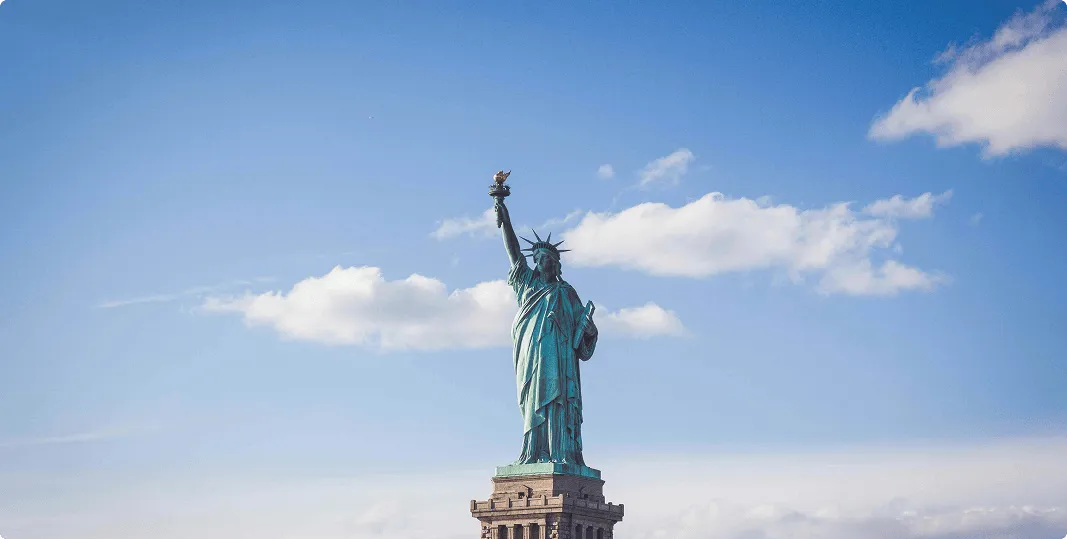
Studying in the United States is a dream for many students around the world, including those from Pakistan. The country offers high-quality education, cutting-edge research opportunities, and cultural diversity, making it one of the most sought-after destinations for international students. To pursue studies in the U.S., Pakistani students must obtain a USA study visa. This guide provides a comprehensive overview of the USA study visa process, especially for applicants from Pakistan.
Table of contents
- Why study in USA?
- Admission requirements in USA
- Scholarships for international students in USA
- Post-Study work opportunities
- Top universities in USA
- Cost of studying in USA
- Student visa requirements in USA
- Book a meeting with expert
What is a USA Study Visa?
A USA study visa is a non-immigrant visa that allows international students to enter the United States for educational purposes. It is essential for students accepted into U.S. institutions, including universities, colleges, and specialized training programs. There are several types of study visas, each catering to specific academic programs and durations of stay.
Admission Requirements in USA:
What are the requirements to study in USA?
The requirements for admission to US institutions might change according to the particular school, course of study, and degree (graduate vs. undergraduate). However, the following is a broad summary of the standard documents and exams you should probably obtain:
- High school diploma or equivalent
- Completed application form
- Statement of purpose
- Resume
- Standardized test scores ( SAT/GRE/GMAT/ACT)
- Application fee
- Letters of recommendation
- Portfolio (for creative programs)
Get Free Consultation
Get a call-back within 24 hours
Types of USA Study Visas
F-1 Visa (Academic Student Visa)
- Purpose: The F-1 visa is for students who are attending an academic program or English language program at a U.S. institution.
- Eligibility: You must be accepted into a SEVP-approved school and enroll as a full-time student in an accredited program.
- Work Eligibility: F-1 students can work on-campus for up to 20 hours per week during the academic year and full-time during school breaks. Off-campus work options include Optional Practical Training (OPT) and Curricular Practical Training (CPT).
- Typical Schools: Universities, colleges, high schools, private elementary schools, conservatories, and language training programs.
- Duration: You can stay in the U.S. for the duration of your studies, plus a 60-day grace period. Extensions may be available in certain cases (e.g., OPT for work after graduation).
M-1 Visa (Vocational/Non-Academic Student Visa)
- Purpose: The M-1 visa is for students who want to attend vocational or technical schools in the U.S.
- Eligibility: You must be accepted into a SEVP-approved vocational or technical program, such as training at a technical or trade school.
- Work Eligibility: M-1 visa holders are not allowed to work while studying. In certain cases, they may apply for practical training after completing their program.
- Typical Schools: Technical schools, trade schools, and non-academic institutions.
- Duration: The M-1 visa is typically granted for the length of the program (up to one year), with the possibility of extensions for practical training.
Study in USA Visa Requirements For Students:
- A valid passport
- Visa application fee
- Details of health insurance policy (OSHC)
- Proof of enrolment (your electronic confirmation of enrolment eCOE)
- Polio certificate
- Passport-sized pictures
- A Genuine Temporary Entrant (GTE) statement
- Financial proof that you can afford living expenses, tuition fees, return airfare, expenses for dependents
J-1 Visa (Exchange Visitor Visa)
- Purpose: The J-1 visa is for students, scholars, or trainees participating in an exchange program in the U.S. It is also used for other categories, such as professors, researchers, and medical interns.
- Eligibility: You must be accepted into a U.S. government-approved exchange program, such as a student exchange, internship, or research program.
- Work Eligibility: J-1 visa holders may be allowed to work part-time or full-time under certain conditions, often as part of the exchange program itself. The visa may include options for academic training after completing the program.
- Typical Programs: Exchange student programs, internships, teaching, research programs, and medical training.
- Home Residency Requirement: Some J-1 visa holders are subject to a two-year home residency requirement, meaning they must return to their home country for two years after completing the program before they can apply for another visa to return to the U.S.
- Duration: The J-1 visa is valid for the duration of the program. Extensions depend on the program and the U.S. sponsor.
F-2, M-2, and J-2 Visas (Dependent Visas)
Purpose:
These visas are for the dependents (spouses and unmarried children under 21) of F-1, M-1, and J-1 visa holders.
- F-2: For dependents of F-1 students.
- M-2: For dependents of M-1 students.
- J-2: For dependents of J-1 exchange visitors.
Eligibility:
Dependents must apply for the respective dependent visa category based on the primary visa holder’s status.
Work Eligibility:
- F-2 and M-2 dependents are generally not permitted to work.
- J-2 dependents may apply for work authorization while in the U.S.
Study Eligibility:
- F-2 spouses cannot engage in full-time study, but children can attend K-12 schools.
- M-2 dependents may attend school but cannot engage in post-secondary education.
- J-2 dependents may study while in the U.S.
Other Related Visas
B-2 Visa (Visitor Visa for Short-Term Study):
- The B-2 tourist visa can sometimes be used for short-term non-degree courses that last fewer than 18 hours per week. This visa is primarily for visiting the U.S. as a tourist, but it can be used for brief study purposes (like taking a workshop, seminar, or short course).
- Limitations: This visa does not permit full-time or long-term academic study.
USA Study Visa Requirements from Pakistan
Pakistani students need to meet several requirements to be eligible for a USA study visa, including:
- Acceptance to a U.S. school: You must have an official letter of admission from a SEVP-certified institution.
- Form I-20 (for F-1 and M-1 visas): This form is issued by the U.S. institution and proves your acceptance and eligibility.
- SEVIS fee payment: Students must pay the SEVIS (Student and Exchange Visitor Information System) fee.
- Financial proof: Applicants must provide evidence of sufficient funds to cover tuition, living expenses, and other costs.
- Valid passport: Your passport must be valid for at least six months beyond your intended stay in the U.S.
- Proof of ties to Pakistan: Evidence that you intend to return to Pakistan after your studies.
- Visa application (DS-160 form): You must complete the DS-160 form online.
Summary of Key Differences
| Visa Type | Purpose | Work Eligibility | Study Programs | Dependent Visa | Duration |
| F-1 | Academic study (universities, colleges, schools) | On-campus work, OPT, CPT | Full-time academic or language programs | F-2 | Length of study + 60 days |
| M-1 | Vocational/non-academic programs | Limited practical training | Technical/vocational programs | M-2 | Up to 1 year (extendable) |
| J-1 | Exchange programs (students, interns, scholars) | Limited work with permission | Exchange programs, internships, training | J-2 | Length of program |
| F-2, M-2, J-2 | Dependents of F-1, M-1, J-1 holders | J-2 can work with authorization | Limited (F-2, M-2), J-2 can study | N/A | Linked to primary visa holder |
| B-2 | Short-term courses or workshops | No work allowed | Short courses (<18 hours per week) | N/A | Short-term stay |
How to Apply for a USA Study Visa from Pakistan
The application process for a USA study visa involves several steps:
- Receive Form I-20: After acceptance by a U.S. school, receive the Form I-20.
- Pay the SEVIS fee: Before applying for a visa, you must pay the SEVIS fee, which is mandatory for all F, M, and J visa applicants.
- Complete the DS-160 form: Fill out the DS-160 online non-immigrant visa application form. Be sure to provide accurate information.
- Schedule a visa interview: You must schedule an appointment for a visa interview at the U.S. Embassy or Consulate in Pakistan.
- Prepare for the interview: Gather all required documents, such as financial proof, passport, SEVIS fee receipt, Form I-20, and any other supporting materials.
- Attend the visa interview: During the interview, a consular officer will determine your eligibility for the USA study visa.
USA Study Visa Fees and Processing Time
The fees for a USA study visa include:
- SEVIS fee: USD $350 (for F and M visas)
- Visa application fee: USD $160
Processing times for USA study visas can vary depending on the time of year and individual cases. Generally, it takes a few weeks to a couple of months from the time of the visa interview to receive a decision.
USA Study Visa Checklist for Pakistani Applicants
Here is a checklist to ensure a smooth USA study visa application process:
- Valid passport
- Form I-20 from a U.S. institution
- Completed DS-160 form
- SEVIS fee receipt
- Visa application fee payment receipt
- Financial proof (bank statements, scholarship letters, etc.)
- Passport-sized photographs
- Academic transcripts and diplomas
- Proof of ties to Pakistan
- Any additional supporting documents required by the U.S. Embassy.
This guide outlines everything Pakistani students need to know about applying for a USA study visa, from types of visas to documentation and application steps, ensuring you’re well-prepared for your academic journey in the U.S.
OUR FAQs
Frequently Asked Questions
1. What is an F-1 Student Visa?
The F-1 Visa is a study visa that allows international students to study full-time at an approved school, college, or university in the United States.
2. Who is eligible for an F-1 Visa?
You must be accepted by a U.S. school, prove you can afford your expenses, and show strong ties to your home country that ensure you will return after studies.
3. What documents do I need for the F-1 Visa?
Typically, you will need your passport, Form I-20, visa application form, SEVIS payment receipt, financial proof, academic records, and a valid admission letter.
4. What is the SEVIS fee?
The SEVIS fee is a mandatory tracking-system fee you pay before your visa interview. It confirms your entry into the U.S. student database.
5. How long can I stay in the U.S. on an F-1 Visa?
You can stay for the entire duration of your study program, plus an additional grace period (usually 60 days) after completing your course.
6. Can I work while on an F-1 Visa?
Yes, but with rules. You can work part-time on campus and may apply for practical training (OPT/CPT) related to your field of study.
7. Do I need health insurance in the U.S.?
Yes, most schools require health insurance for international students, and it helps protect you from high medical costs in the U.S.
8. Can I apply for a Green Card after my studies?
It’s possible, but not automatic. You may qualify through employment, sponsorship, or other immigration programs after completing your degree.
9. Can I stay in the U.S. if I finish my studies early?
You must inform your school. You can stay only for your grace period unless you transfer, extend your program, or change your visa status.
Studying in the United States is a dream for many students around the world, including those from Pakistan. The country offers high-quality education, cutting-edge research opportunities, and cultural diversity, making it one of the most sought-after destinations for international students. To pursue studies in the U.S., Pakistani students must obtain a USA study visa. This guide provides a comprehensive overview of the USA study visa process, especially for applicants from Pakistan.
What is a USA Study Visa?
A USA study visa is a non-immigrant visa that allows international students to enter the United States for educational purposes. It is essential for students accepted into U.S. institutions, including universities, colleges, and specialized training programs. There are several types of study visas, each catering to specific academic programs and durations of stay.
Types of USA Study Visas
F-1 Visa (Academic Student Visa)
- Purpose: The F-1 visa is for students who are attending an academic program or English language program at a U.S. institution.
- Eligibility: You must be accepted into a SEVP-approved school and enroll as a full-time student in an accredited program.
- Work Eligibility: F-1 students can work on-campus for up to 20 hours per week during the academic year and full-time during school breaks. Off-campus work options include Optional Practical Training (OPT) and Curricular Practical Training (CPT).
- Typical Schools: Universities, colleges, high schools, private elementary schools, conservatories, and language training programs.
- Duration: You can stay in the U.S. for the duration of your studies, plus a 60-day grace period. Extensions may be available in certain cases (e.g., OPT for work after graduation).
M-1 Visa (Vocational/Non-Academic Student Visa)
- Purpose: The M-1 visa is for students who want to attend vocational or technical schools in the U.S.
- Eligibility: You must be accepted into a SEVP-approved vocational or technical program, such as training at a technical or trade school.
- Work Eligibility: M-1 visa holders are not allowed to work while studying. In certain cases, they may apply for practical training after completing their program.
- Typical Schools: Technical schools, trade schools, and non-academic institutions.
- Duration: The M-1 visa is typically granted for the length of the program (up to one year), with the possibility of extensions for practical training.
J-1 Visa (Exchange Visitor Visa)
- Purpose: The J-1 visa is for students, scholars, or trainees participating in an exchange program in the U.S. It is also used for other categories, such as professors, researchers, and medical interns.
- Eligibility: You must be accepted into a U.S. government-approved exchange program, such as a student exchange, internship, or research program.
- Work Eligibility: J-1 visa holders may be allowed to work part-time or full-time under certain conditions, often as part of the exchange program itself. The visa may include options for academic training after completing the program.
- Typical Programs: Exchange student programs, internships, teaching, research programs, and medical training.
- Home Residency Requirement: Some J-1 visa holders are subject to a two-year home residency requirement, meaning they must return to their home country for two years after completing the program before they can apply for another visa to return to the U.S.
- Duration: The J-1 visa is valid for the duration of the program. Extensions depend on the program and the U.S. sponsor.
F-2, M-2, and J-2 Visas (Dependent Visas)
Purpose:
These visas are for the dependents (spouses and unmarried children under 21) of F-1, M-1, and J-1 visa holders.
- F-2: For dependents of F-1 students.
- M-2: For dependents of M-1 students.
- J-2: For dependents of J-1 exchange visitors.
Eligibility:
Dependents must apply for the respective dependent visa category based on the primary visa holder’s status.
Work Eligibility:
- F-2 and M-2 dependents are generally not permitted to work.
- J-2 dependents may apply for work authorization while in the U.S.
Study Eligibility:
- F-2 spouses cannot engage in full-time study, but children can attend K-12 schools.
- M-2 dependents may attend school but cannot engage in post-secondary education.
- J-2 dependents may study while in the U.S.
Other Related Visas
B-2 Visa (Visitor Visa for Short-Term Study):
- The B-2 tourist visa can sometimes be used for short-term non-degree courses that last fewer than 18 hours per week. This visa is primarily for visiting the U.S. as a tourist, but it can be used for brief study purposes (like taking a workshop, seminar, or short course).
- Limitations: This visa does not permit full-time or long-term academic study.
USA Study Visa Requirements from Pakistan
Pakistani students need to meet several requirements to be eligible for a USA study visa, including:
- Acceptance to a U.S. school: You must have an official letter of admission from a SEVP-certified institution.
- Form I-20 (for F-1 and M-1 visas): This form is issued by the U.S. institution and proves your acceptance and eligibility.
- SEVIS fee payment: Students must pay the SEVIS (Student and Exchange Visitor Information System) fee.
- Financial proof: Applicants must provide evidence of sufficient funds to cover tuition, living expenses, and other costs.
- Valid passport: Your passport must be valid for at least six months beyond your intended stay in the U.S.
- Proof of ties to Pakistan: Evidence that you intend to return to Pakistan after your studies.
- Visa application (DS-160 form): You must complete the DS-160 form online.
Summary of Key Differences
| Visa Type | Purpose | Work Eligibility | Study Programs | Dependent Visa | Duration |
| F-1 | Academic study (universities, colleges, schools) | On-campus work, OPT, CPT | Full-time academic or language programs | F-2 | Length of study + 60 days |
| M-1 | Vocational/non-academic programs | Limited practical training | Technical/vocational programs | M-2 | Up to 1 year (extendable) |
| J-1 | Exchange programs (students, interns, scholars) | Limited work with permission | Exchange programs, internships, training | J-2 | Length of program |
| F-2, M-2, J-2 | Dependents of F-1, M-1, J-1 holders | J-2 can work with authorization | Limited (F-2, M-2), J-2 can study | N/A | Linked to primary visa holder |
| B-2 | Short-term courses or workshops | No work allowed | Short courses (<18 hours per week) | N/A | Short-term stay |
How to Apply for a USA Study Visa from Pakistan
The application process for a USA study visa involves several steps:
- Receive Form I-20: After acceptance by a U.S. school, receive the Form I-20.
- Pay the SEVIS fee: Before applying for a visa, you must pay the SEVIS fee, which is mandatory for all F, M, and J visa applicants.
- Complete the DS-160 form: Fill out the DS-160 online non-immigrant visa application form. Be sure to provide accurate information.
- Schedule a visa interview: You must schedule an appointment for a visa interview at the U.S. Embassy or Consulate in Pakistan.
- Prepare for the interview: Gather all required documents, such as financial proof, passport, SEVIS fee receipt, Form I-20, and any other supporting materials.
- Attend the visa interview: During the interview, a consular officer will determine your eligibility for the USA study visa.
USA Study Visa Fees and Processing Time
The fees for a USA study visa include:
- SEVIS fee: USD $350 (for F and M visas)
- Visa application fee: USD $160
Processing times for USA study visas can vary depending on the time of year and individual cases. Generally, it takes a few weeks to a couple of months from the time of the visa interview to receive a decision.
USA Study Visa Checklist for Pakistani Applicants
Here is a checklist to ensure a smooth USA study visa application process:
- Valid passport
- Form I-20 from a U.S. institution
- Completed DS-160 form
- SEVIS fee receipt
- Visa application fee payment receipt
- Financial proof (bank statements, scholarship letters, etc.)
- Passport-sized photographs
- Academic transcripts and diplomas
- Proof of ties to Pakistan
- Any additional supporting documents required by the U.S. Embassy.
This guide outlines everything Pakistani students need to know about applying for a USA study visa, from types of visas to documentation and application steps, ensuring you’re well-prepared for your academic journey in the U.S.
FAQs
What is an F-1 Visa?
The F-1 visa is a non-immigrant visa that allows foreign students to study full-time at accredited academic institutions in the U.S., such as universities, colleges, high schools, language training programs, and other approved institutions.
What are the eligibility requirements for an F-1 Visa?
- Acceptance by a SEVP (Student and Exchange Visitor Program)-approved school.
- Enrollment in a full-time academic program.
- Proof of sufficient funds to cover tuition, living expenses, and travel.
- Strong ties to your home country (intent to return after completing studies).
- Proficiency in English or enrollment in courses to improve English proficiency.
What documents are required for the F-1 Visa application?
- Valid passport.
- Form I-20 from a SEVP-approved school.
- Non-immigrant visa application (Form DS-160).
- Visa application fee receipt.
- Passport-sized photos.
- Proof of financial support (bank statements, scholarship letters, etc.).
- SEVIS (Student and Exchange Visitor Information System) fee receipt.
- Transcripts, diplomas, or certificates from previous institutions.
FAQs
What is the SEVIS fee?
SEVIS (Student and Exchange Visitor Information System) is a tracking system for international students. The SEVIS fee (currently $350 for F-1) must be paid before the visa interview. The SEVIS fee is separate from the visa application fee.
How long can I stay in the U.S. on an F-1 Visa?
You can stay in the U.S. as long as you are enrolled in a full-time program and maintain your F-1 status. After completing your program, you may stay for an additional 60 days, called the grace period, to prepare for departure or apply for Optional Practical Training (OPT).
Can I work on an F-1 Visa?
Yes, but with limitations. F-1 students can work on-campus for up to 20 hours per week during the academic year and full-time during vacations. Off-campus work is allowed through Optional Practical Training (OPT) and Curricular Practical Training (CPT), but these require specific authorization.
Do I need health insurance while studying in the U.S.?
Most schools in the U.S. require international students to have health insurance. You can either purchase the school’s plan or provide proof of comparable coverage.
Can I apply for a green card after studying in the U.S.?
While an F-1 visa does not directly lead to a green card, you may apply for a change of status to a work visa (H-1B) or other pathways that could eventually lead to permanent residency.
Can I stay in the U.S. if I finish my studies early?
If you complete your program early, you still have the 60-day grace period to leave the U.S. or change your status.